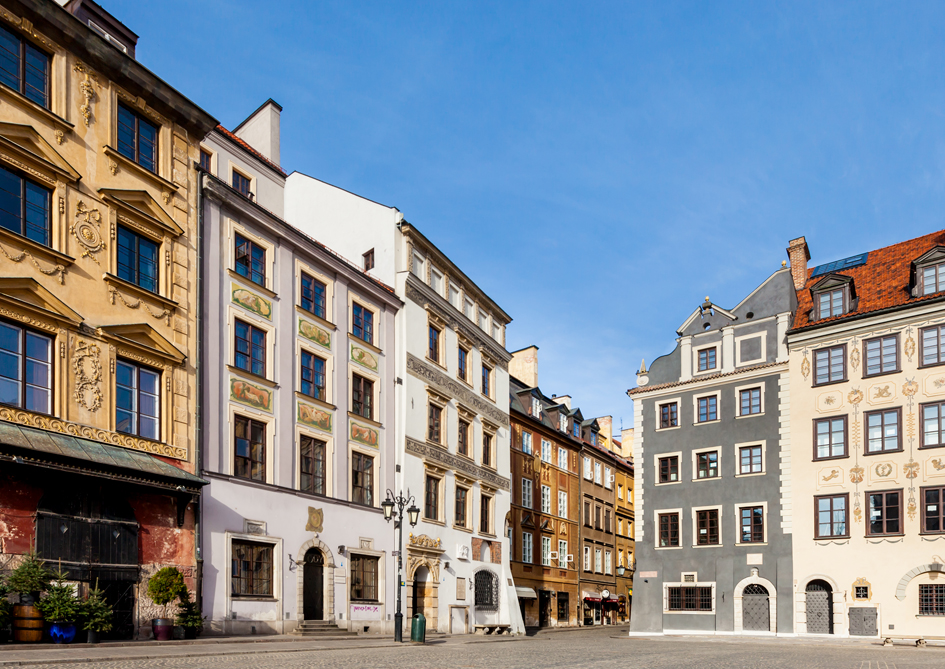
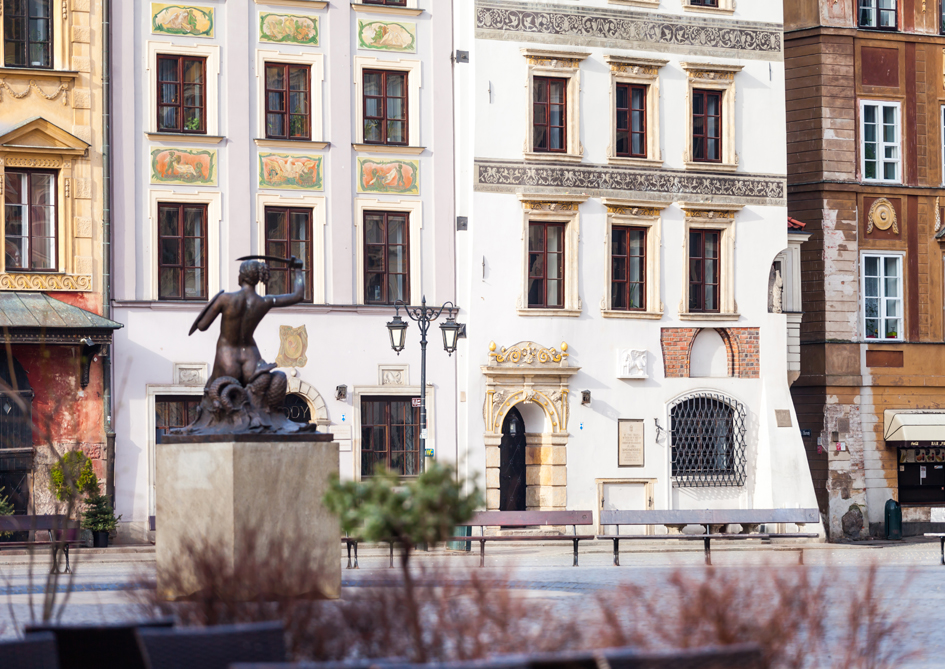
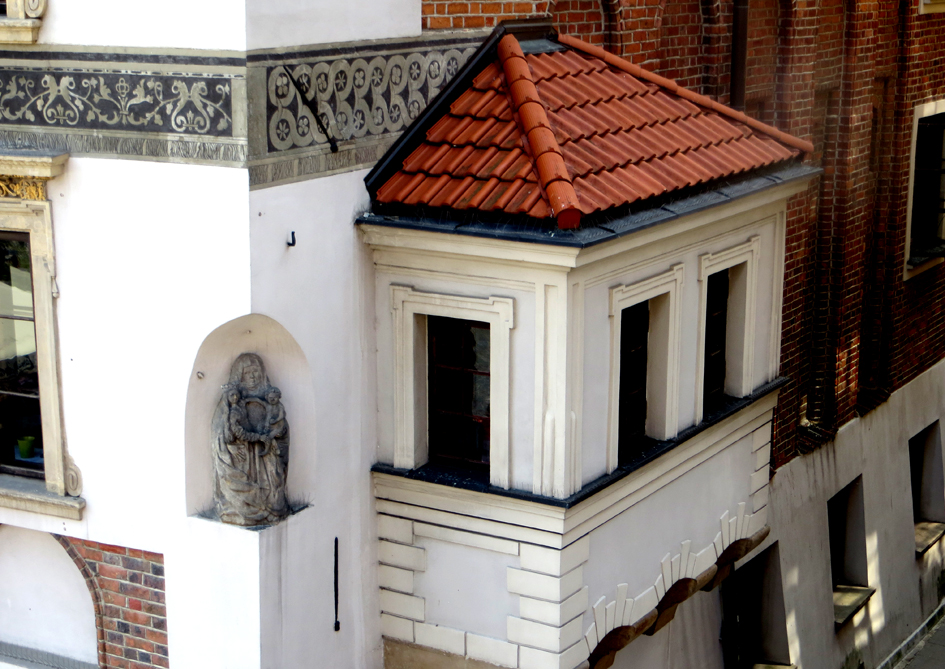
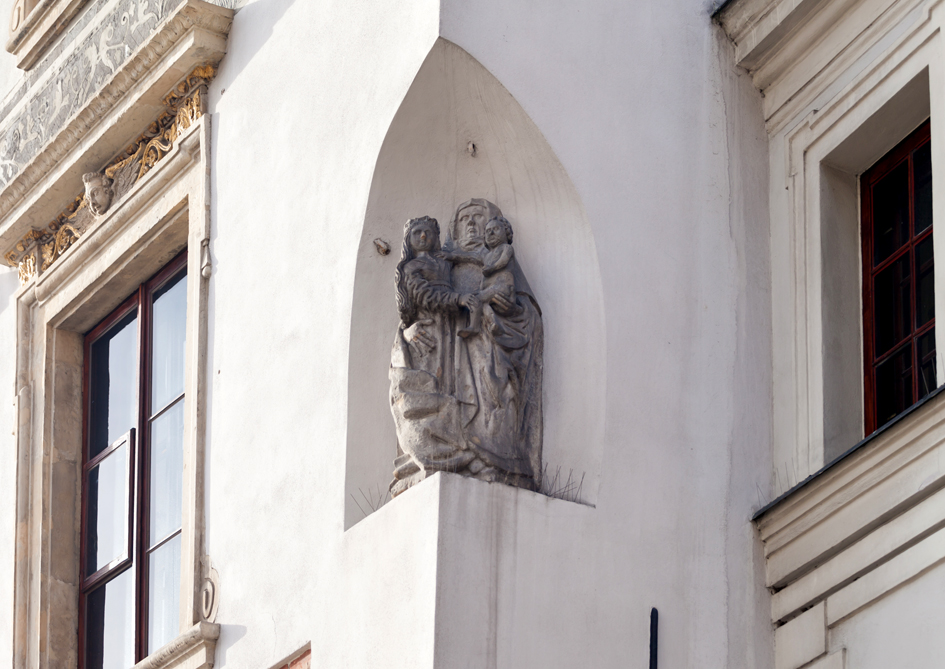
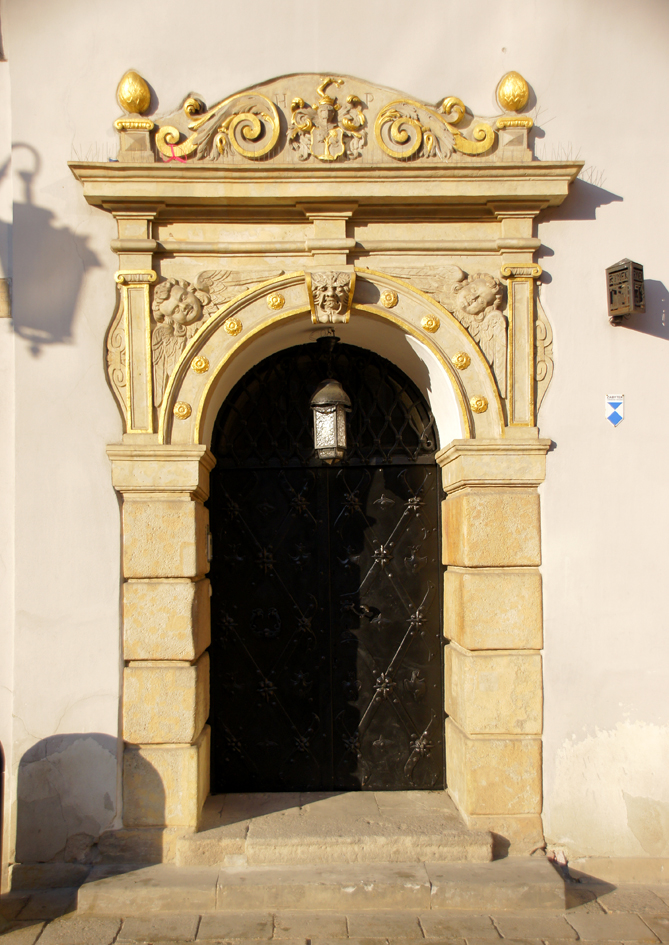
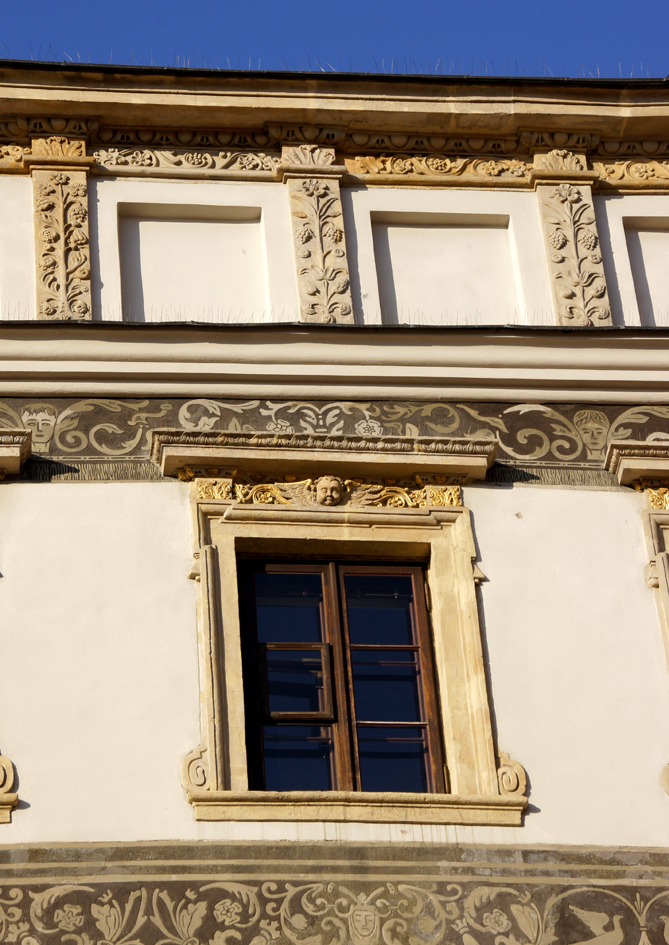
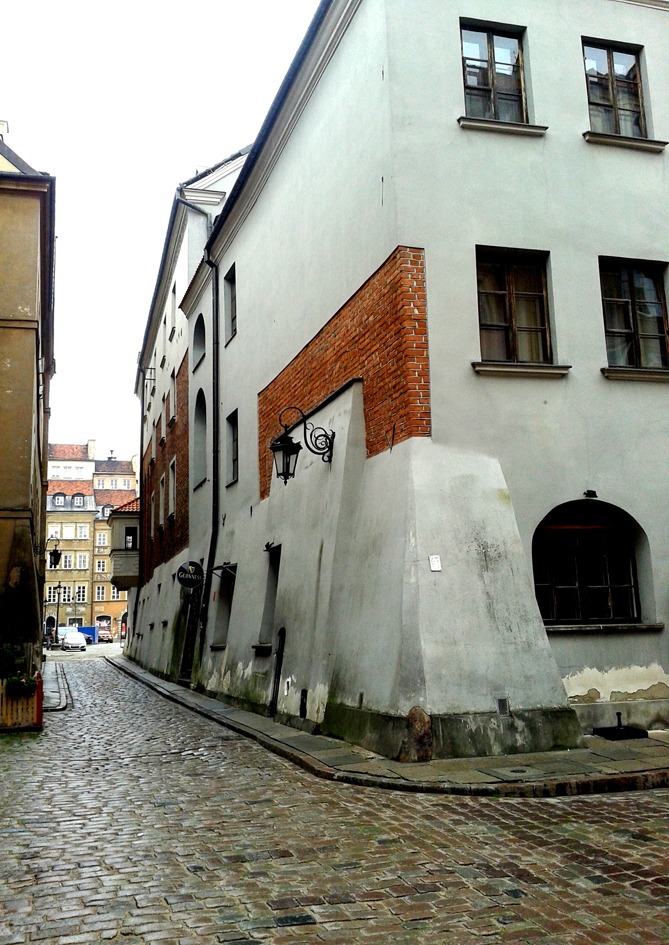
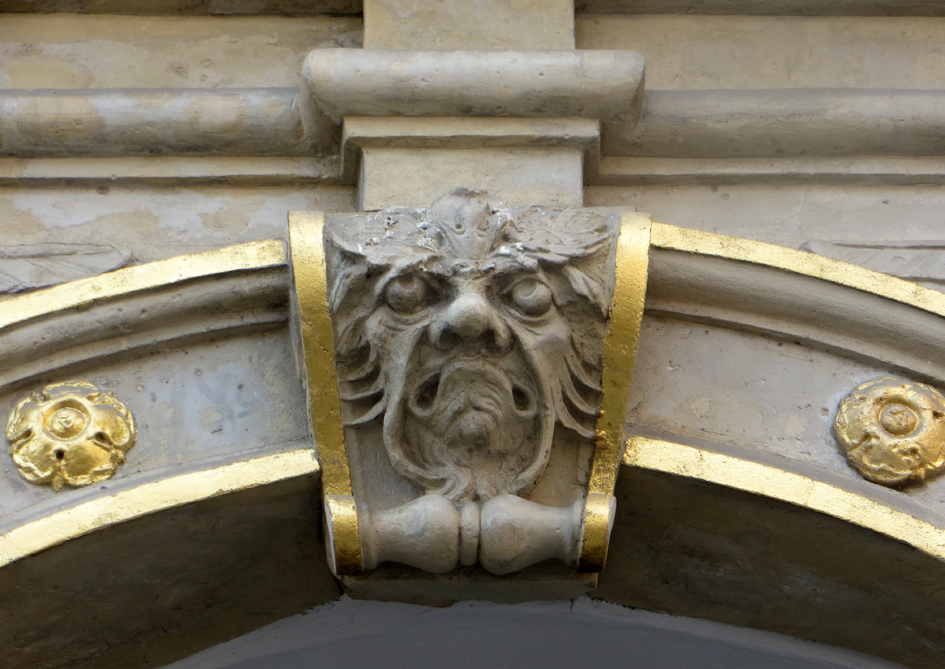
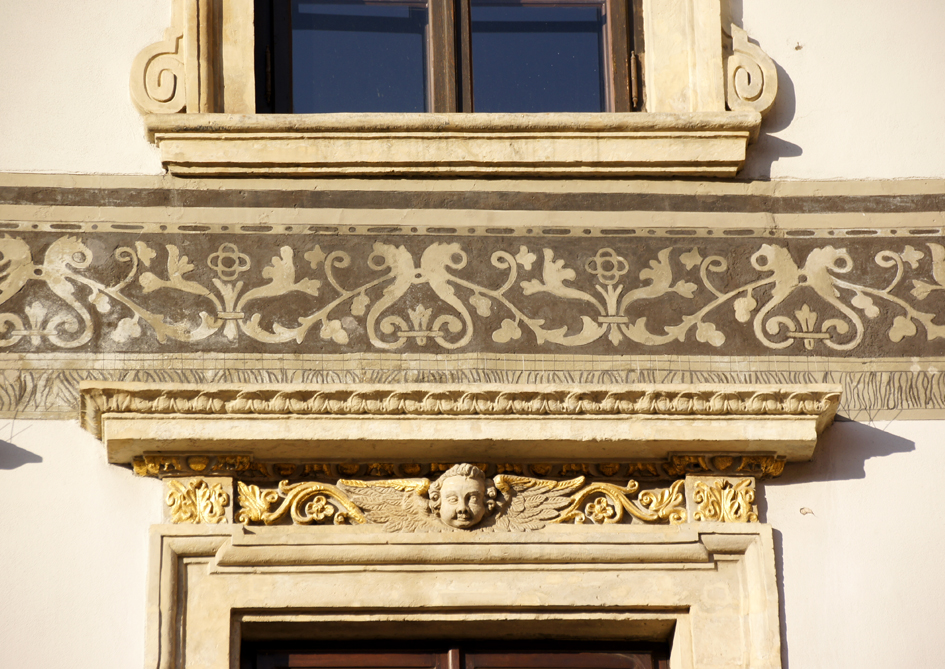
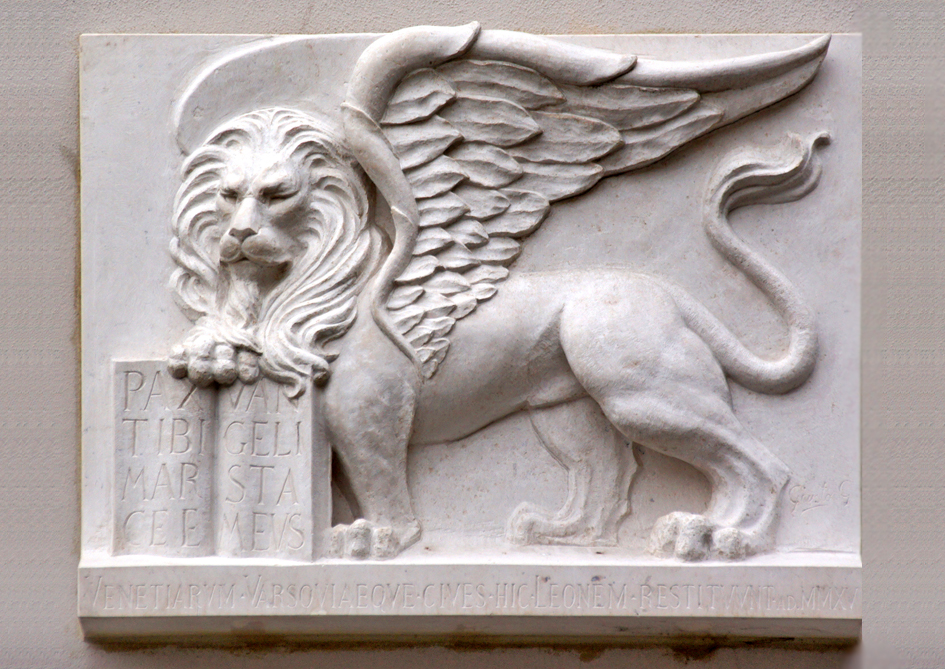
House No. 29 was built before 1442 (at the time it belonged to Andrzej Grabski) and was the first brick house in this sector of buildings by the square. In 1444, it became the property of Andrzej Kazub, a merchant from the petty nobility of Korytów in the Wyszogród land. The progenitor of a distinguished family in the patriciate of Old Warsaw, he maintained business contacts with Gdańsk, Poznań, Wrocław and Kraków, and visited Rome. In 1478, he bought the princely village of Duchnów in the Warsaw land. He was a juror and then a councillor, and in the years 1480 (?) and 1493–1494 mayor of the city. After 1502, when Andrzej Kazub and his son Jan died, the house belonged to the widow of Jan, Małgorzata, and their children. Numerous remains of Gothic architectural motifs and a brick portal have been preserved in the cellars and ground floor walls from before the mid-16th century.
Around the middle of the 16th century, the brick house passed into the hands of another patrician family – the Gizas. The owners of this particular house attested to in the sources are: Jakubowa Gizina (1612), Mikołaj Giza son of Jakub (1640), Gizina widow of Mikołaj (1656, 1669). In the 18th century, the house was called Sakresowska, as it is known that in 1741 it was owned by Michał Sacres, a juror and later the mayor. Around the middle of the 18th century the house was rebuilt, among other things receiving a new façade. In 1754, it belonged to Ignacy Nowicki, the Crown Metrican, and in 1788–1846 to Józef and Anna Filipecki and their heirs. After being destroyed in 1944, fragments of the ground floor walls with the portal have survived. In the years 1951–1953 the brick house was rebuilt to the design of Wacław Podlewski, with the reconstruction of the body and façade from the mid-18th century.